What Is Commercial Refurbishment?
Commercial refurbishment is the process of renovating, updating, or redesigning an existing commercial building to improve its functionality, appearance, and service to its users.
It can range from targeted internal upgrades, new flooring, improved lighting, modernised M&E systems, through to a full building transformation involving structural change, heritage restoration, or a complete rethinking of how a space is planned and used.
It is not the same as a fit-out. A fit-out typically refers to transforming an empty shell into a usable space. Refurbishment starts with a building that already has a life and a purpose, and asks how that building can work better, for longer.
The Different Scales of Refurbishment
Not every project is the same, and the scope of a commercial refurbishment should always reflect your goals, your lease, and the building’s long-term future.
A minor refurbishment focuses on cosmetic renewal, repainting, replacing worn fixtures and fittings, refreshing flooring, or upgrading décor. It’s often the right approach when a space needs freshening without major disruption, or when a lease term limits the extent of works.
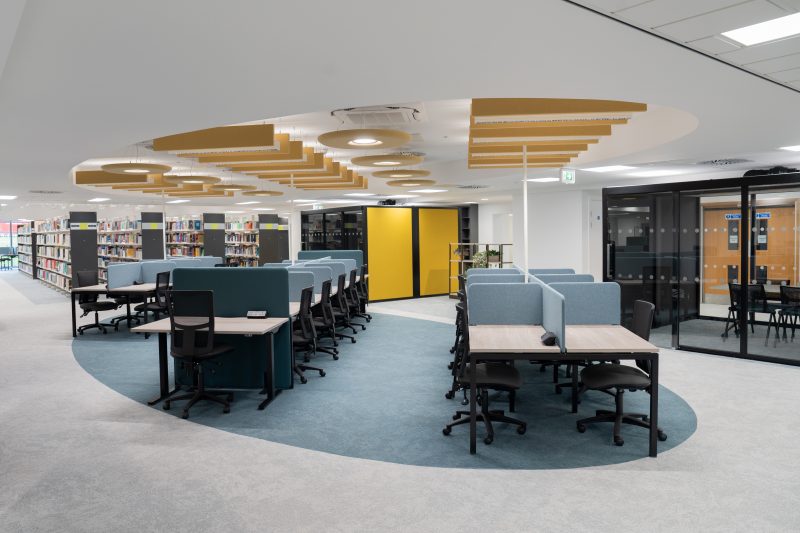
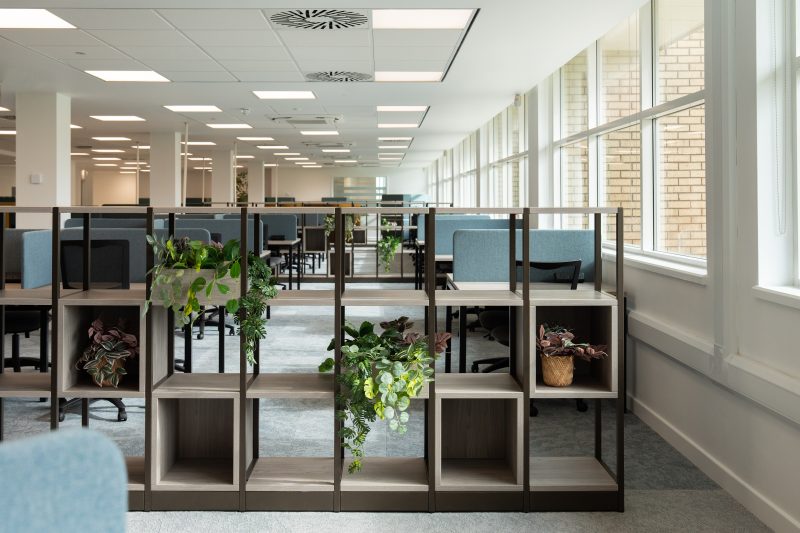
A medium refurbishment goes further. It might include reconfiguring internal layouts, installing new heating, ventilation, and cooling systems, improving lighting, or creating new breakout and collaboration spaces.
These projects meaningfully improve usability and bring a building closer to current standards.
A full refurbishment is a more comprehensive undertaking, including structural alterations, full M&E replacement, significant heritage restoration, or the adaptive reuse of a building for a new function entirely.
These projects require early, detailed planning and close collaboration between the client, design team and contractor from the outset.
Sectors Where Commercial Refurbishment Matters Most
Commercial refurbishment spans a wide range of building types, and the demands of each sector shape the approach.
In offices and workplaces, the focus is often on improving how people move through and experience a space.
Hybrid working has changed what businesses need from their buildings, and refurbishment is frequently the lever used to adapt, creating a better mix of focus areas, collaborative zones and amenity spaces that give people a reason to come in.
In healthcare, the stakes are higher. Refurbishment of clinical and mental health environments must balance compliance with care, improve conditions for patients and staff, and work within strict regulatory requirements, often without closing the facility.
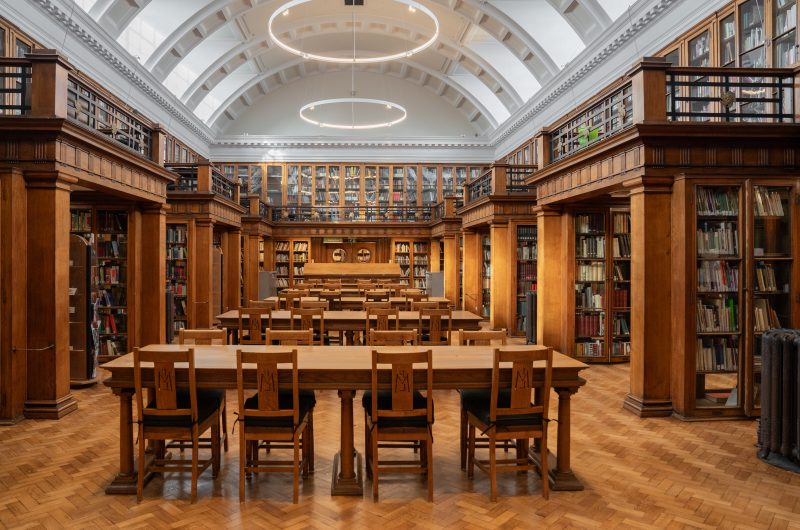
In education, refurbishment directly shapes the learning environment. Whether it’s upgrading a library, modernising student accommodation, or improving a teaching space, the quality of the built environment has a measurable impact on how students and staff experience it.
Local authority and heritage buildings present their own set of challenges. Listed buildings require a careful, research-led approach, understanding what can and cannot be changed, and finding ways to introduce modern function without compromising the character and fabric of the building.
It is demanding work, but when done well, it extends the life of some of our most important public buildings.
What Does a Commercial Refurbishment Typically Include?
The scope of works will always depend on the project, but a commercial refurbishment typically draws on a combination of the following:
Space planning and layout reconfiguration, structural alterations where required, the replacement or upgrade of mechanical, electrical and plumbing systems, improvements to fire safety and compliance, upgraded insulation and energy performance, new flooring, ceilings and wall finishes, lighting design and installation, joinery and specialist fit-out elements, and, where relevant, furniture procurement and FF&E coordination.
On more complex projects, works may also include digital infrastructure upgrades, wayfinding and signage, acoustic treatment, and the careful management of existing fabric, particularly in older or listed buildings.
Working in Live Environments
One of the most significant considerations in commercial refurbishment and one that is often underestimated, is how to deliver the work while the building remains in use.
Hospitals cannot close. Universities run to fixed academic calendars. Local authority buildings serve communities that depend on them.
Delivering refurbishment in these environments requires careful, detailed planning: phased programmes, considered access routes, noise management, coordinated sequencing with estates teams, and a site team that understands the responsibility that comes with working around real people going about their daily lives.
It is not simply a logistical challenge. It requires a particular mindset, one that treats disruption as something to be genuinely minimised, not just managed on paper.
Our Team Is Aware Of All Regulatory Requirements
Commercial refurbishment sits within a clear regulatory framework, and understanding it early is essential. The extent of the works will determine exactly which regulations apply, but most projects will need to consider some combination of the following.
Building Regulations 2010 set minimum standards for structural safety, energy efficiency, ventilation, fire safety and accessibility.
Where works are notifiable, a completion certificate must be obtained. The CDM Regulations 2015 apply to all construction projects, including refurbishment, and define responsibilities for health and safety throughout the design and delivery phases.
Planning permission may be required depending on the nature and scale of works, and is almost always required for listed buildings. Asbestos surveys are a legal requirement under the Control of Asbestos Regulations 2012 before any invasive works begin in pre-2000 buildings.
And Minimum Energy Efficiency Standards (MEES) now set a baseline EPC rating for commercially let properties, making energy performance improvements not just desirable but, in some cases, a legal obligation.
The right contractor will not treat compliance as an afterthought. These requirements need to be planned from day one.
Why Refurbish? What’s The Business Case
Done well, commercial refurbishment delivers returns that go well beyond aesthetics. Improved spaces tend to improve the people in them. Better working environments support productivity, reduce absence, and make buildings easier to recruit and retain people.
For landlords and estate managers, refurbishment directly affects asset value and rental performance. For public sector clients, it extends the working life of buildings and protects capital investment.
There is also a sustainability argument that is becoming harder to ignore. Upgrading insulation, glazing, ventilation, and lighting reduces operational energy use, improves EPC ratings, and brings buildings closer to the net-zero targets that organisations across every sector are now committed to.
Refurbishment is, at its core, a decision to invest in the long-term future of a building, to make it work better, last longer, and serve its users more effectively than it does today.
The Importance of Early Engagement With A Specialist Company
The most successful commercial refurbishment projects start well before work begins on site. Early engagement between client and contractor creates the space to understand constraints properly, align on priorities, explore design possibilities and shape a programme that is realistic from the outset.
It is where risk gets identified and managed, rather than discovered mid-project. It is where creative ambition meets practical reality.
And it is where the relationship between client and contractor is established, which, on a complex refurbishment, matters as much as anything else.
If you are considering a commercial refurbishment and would like to talk through your project at an early stage, get in touch with the Aptus team.
Aptus Construction is an established commercial refurbishment contractor working across the North East and Yorkshire. Our work spans offices, healthcare facilities, education estates, heritage buildings and local authority properties. Find out more about what we do or view our recent projects.